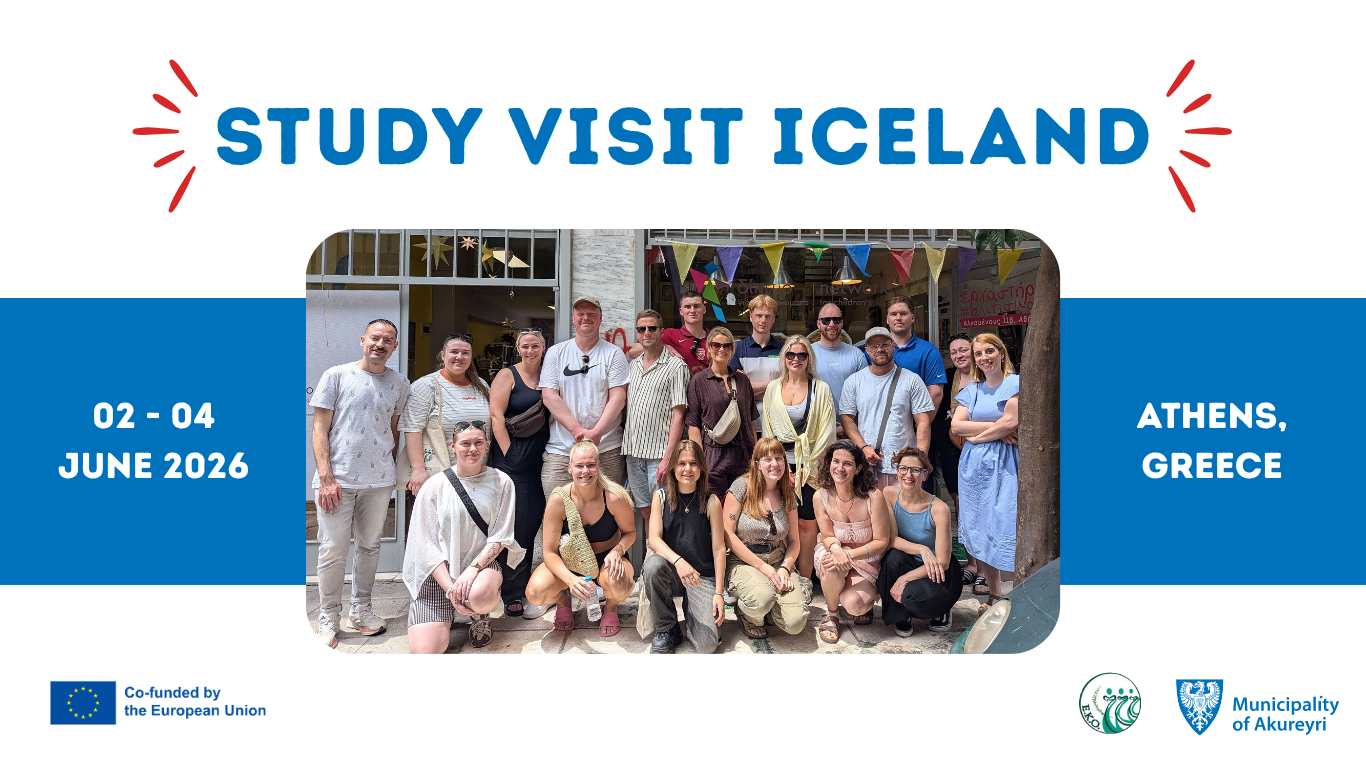
Study Visit Icelandic Partners – June 2026
From 2–4 June 2026, EKO hosted a study visit for a group of 15 youth workers from Akureyri, Iceland. Throughout the three days, we explored different approaches to youth engagement, non-formal education, and community-based youth work in Greece and Iceland.
Day 1 – Tuesday, 2 June 2026
The study visit began with the arrival of the Icelandic group at EKO’s office, where we welcomed our guests and introduced ourselves to one another. Following the introductions, both groups presented their work and areas of activity. EKO shared its mission, projects, and experiences in youth work, non-formal education, and international projects, with a particular focus on Erasmus+ initiatives. Afterwards, the Icelandic group presented the structure of youth work in Iceland, focusing particularly on the network of municipally funded children’s and youth clubs located in every neighbourhood of Akureyri and the opportunities they provide for young people.
To encourage intercultural exchange and mutual learning, participants took part in a Kahoot quiz about Greece and Iceland before engaging in a discussion on youth work practices and experiences. We explored the structures, challenges, and opportunities within our respective systems and examined similarities and differences between the Icelandic and Greek approaches to supporting children and teenagers.
Day 2 – Wednesday, 3 June 2026
The second day was dedicated to environmental education for students and young people and included a visit to the Environmental Education Centre of Argyroupoli in the south-eastern part of Athens. The educators of the centre welcomed everyone and introduced their work, educational philosophy, and the programmes they offer to schools. Rather than presenting the information solely on a theoretical level, our Icelandic guests experienced the practical educational programme they normally deliver to pupils first-hand.
The group engaged in a series of interactive activities centred on the theme of forests and biodiversity; first in the classroom facilities and later outdoors in a nearby forest area, which was planted by residents of Athens after the Second World War. Here, participants explored topics such as food chains, biodiversity, ecological interdependence, and the unique characteristics of different plant species. The visit highlighted the importance of connecting with nature and demonstrated how experiential learning can be used to foster environmental awareness among children and young people.
Day 3 – Thursday, 4 June 2026
The first visit of the day took place at the Hellenic Cosmos Cultural Centre, a place that combines history, culture, and technology through interactive exhibitions, educational programmes, and virtual reality experiences. A highlight of the visit was the interactive virtual tour of the Acropolis of Athens in the 5th century BC in the centre’s “Tholos” virtual reality theatre. Through advanced digital technologies, our guests from Iceland were able to explore a detailed reconstruction of the Acropolis and its monuments, gaining a deeper understanding of ancient Greek history, architecture, and cultural heritage.
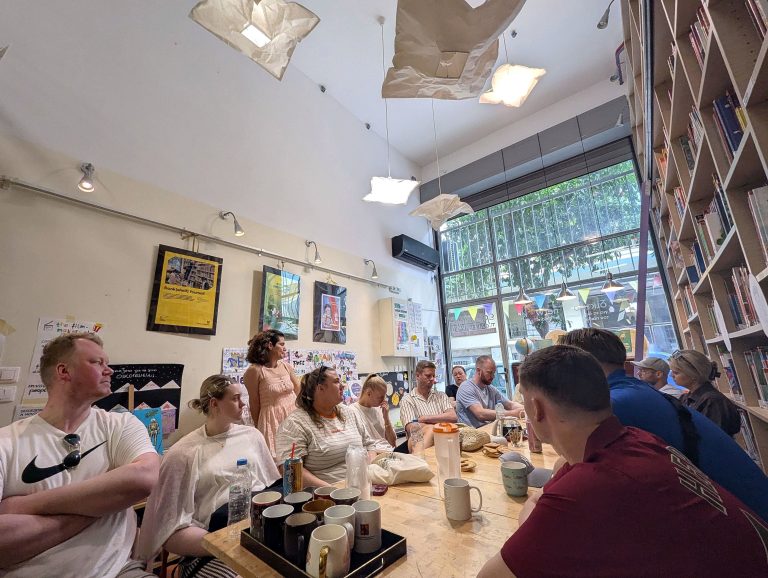
Next, we visited the Network for Children’s Rights, an organisation working with children and young people, particularly those from disadvantaged backgrounds. The children’s programme for ages 5–12 places a strong emphasis on literacy, creativity, and inclusion, with many activities centred around books, reading, and storytelling. In addition, they run a youth center for teenagers and young adults, which offers a wide range of opportunities for participation, including sports, theatre, dance, music, table tennis, games, and self-defence classes. The organisation also works with unaccompanied refugee minors and other vulnerable groups, creating safe spaces where young people can develop skills, build confidence, and strengthen their social connections.
A significant part of the visit was dedicated to the exchange of practices between the Icelandic youth club system and the approaches used by the Network for Children’s Rights. In particular, the conversation highlighted the different levels of flexibility and opportunities available when working with young people, schools, teachers, and parents on topics such as personal empowerment and sexuality education.
Conclusion
The study visit successfully created opportunities for mutual learning, professional exchange, and intercultural dialogue between the Icelandic guests and organisations in Athens through presentations, discussions, field visits, and participatory activities. Furthermore, it strengthened connections between the participating organisations and laid the groundwork for future collaborations.
We would like to thank the group of youth workers from Iceland for visiting us at EKO, as well as the Environmental Education Centre of Argyroupoli, the Hellenic Cosmos Cultural Centre, and the Network for Children’s Rights for their hospitality and valuable contributions to the programme.