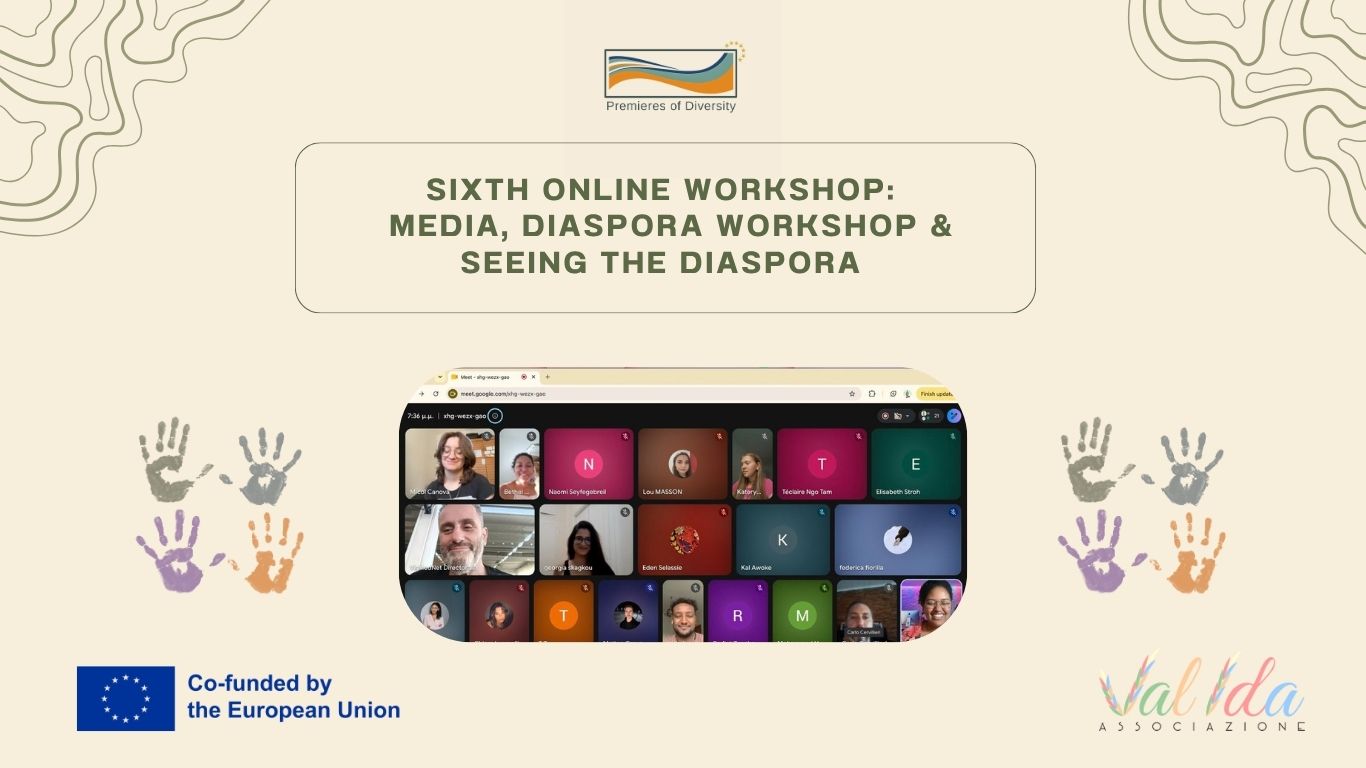
Our Sixth Online Workshop!
We are excited to share the successful completion of another engaging workshop of the Premieres of Diversity project! This thought-provoking session, titled “Seeing the Diaspora: How Western & European Media Portrays Ethiopians Abroad,” brought participants together to explore media representation, diaspora identity, historical narratives, and the ways in which media coverage can shape public perceptions of Ethiopian communities abroad. The 90-minute workshop combined presentations, an interactive quiz, and open discussion, creating space for both learning and exchange.
During the workshop, participants explored why media portrayal matters, examining how media coverage can shape first impressions before people encounter one another personally, influence wider debates around migration and asylum, and even affect how members of diaspora communities understand and perceive themselves. The session highlighted the important role that media plays not only in describing communities and events, but also in shaping expectations and public narratives around them.
The workshop then examined six different media lenses, connecting historical and contemporary representations of Ethiopia and its diaspora. Participants reflected on Italy’s colonial relationship with Ethiopia, including the Battle of Adwa and the Italian occupation, and considered how this history continues to influence cultural memory and representation. The session also introduced examples of diaspora voices and creative works that challenge or revisit these historical narratives, including literature and documentary storytelling.
Another important focus was the lasting influence of Western media coverage of the 1984 Ethiopian famine. Participants examined how images of suffering became deeply embedded in international perceptions of Ethiopia and discussed what these representations often left out, including the political context of the famine, the work of Ethiopian aid workers and institutions, and the agency of Ethiopians themselves. This encouraged reflection on the difference between media narratives centred on charity and those that examine wider questions of justice and context.
The session also explored migration narratives in European media, particularly in countries such as Italy, Malta, and Greece. Participants considered how terms such as “waves,” “floods,” and “crisis” can reduce individual migration experiences to anonymous groups, while media attention often ends at the point of arrival rather than following people’s lives, contributions, and experiences within their new communities.
Through interactive exchanges, the quiz, and collaborative discussions, participants:
– Explored how historical events and colonial memory continue to influence contemporary representations of Ethiopia and its diaspora
– Examined how famine-related imagery has shaped long-lasting international perceptions of Ethiopia
– Reflected on the impact of migration and “crisis” framing on the representation of Ethiopians and other African communities in Europe
– Discovered how Ethiopian diaspora organisations, community media, writers, and other creators are developing counter-narratives and becoming producers of their own stories
– Discussed how diaspora communities can hold different perspectives on the same media coverage, particularly in relation to conflict and political narratives
– Reflected on how more nuanced, contextual, and inclusive media representation can move beyond simplified or stereotypical narratives
The workshop was highly participatory, giving attendees the opportunity to compare perspectives from the six countries represented in the room, test their knowledge through an interactive quiz, and engage in an open discussion about colonial-era portrayals, famine imagery, migration narratives, race, diaspora-run media, and possible changes to the way European newsrooms cover Ethiopia and Ethiopian communities.
This workshop marked another important step in the Premieres of Diversity journey, strengthening participants’ understanding of how media narratives are created, repeated, and challenged. Most importantly, it highlighted that there is no single Ethiopian diaspora story: identities and experiences are diverse, and diaspora communities are increasingly becoming active producers of their own narratives rather than simply subjects of mainstream media coverage.
We look forward to continuing this inspiring journey together in the upcoming activities of the project!